
Film before claims.
The original play remains the reference. An observation and a prediction are different things.
A new perspective on hockey
The best plays don’t always touch the puck.
See them. Understand them. Develop them.
01 / A different kind of hockey intelligence
The lane that opens. The gap that closes. The support that makes the next play possible.
RynkIQ connects game film, positional analysis and your coaching system to make the off-puck game visible. So coaches can teach with context, agents can build a clearer case, and players can see what comes next.
Meet the intelligence02 / From film to understanding
Explore the three layers of the RynkIQ approach. Real film, an illustrative tactical view, and the evidence that makes an observation useful.
A moment worth teaching
Review the supporting player’s position, the lane available, and the expectation in the coach’s system.
Illustrative report contentFilm: “Ice Hockey CZ Jesenice” by HK CRVENA ZVEZDA, CC BY 3.0. Demo includes illustrative product output. Hero arena is generated brand artwork.
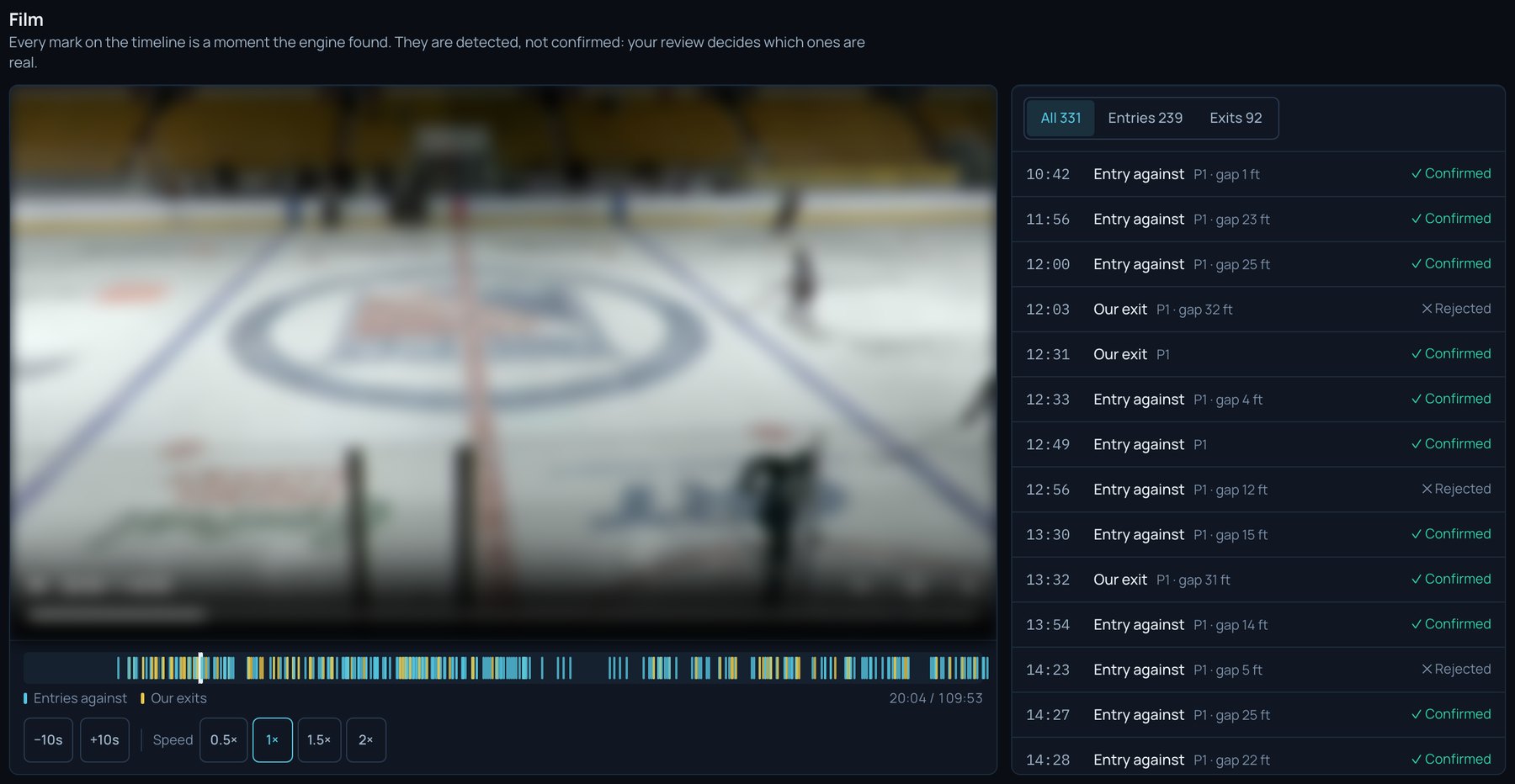
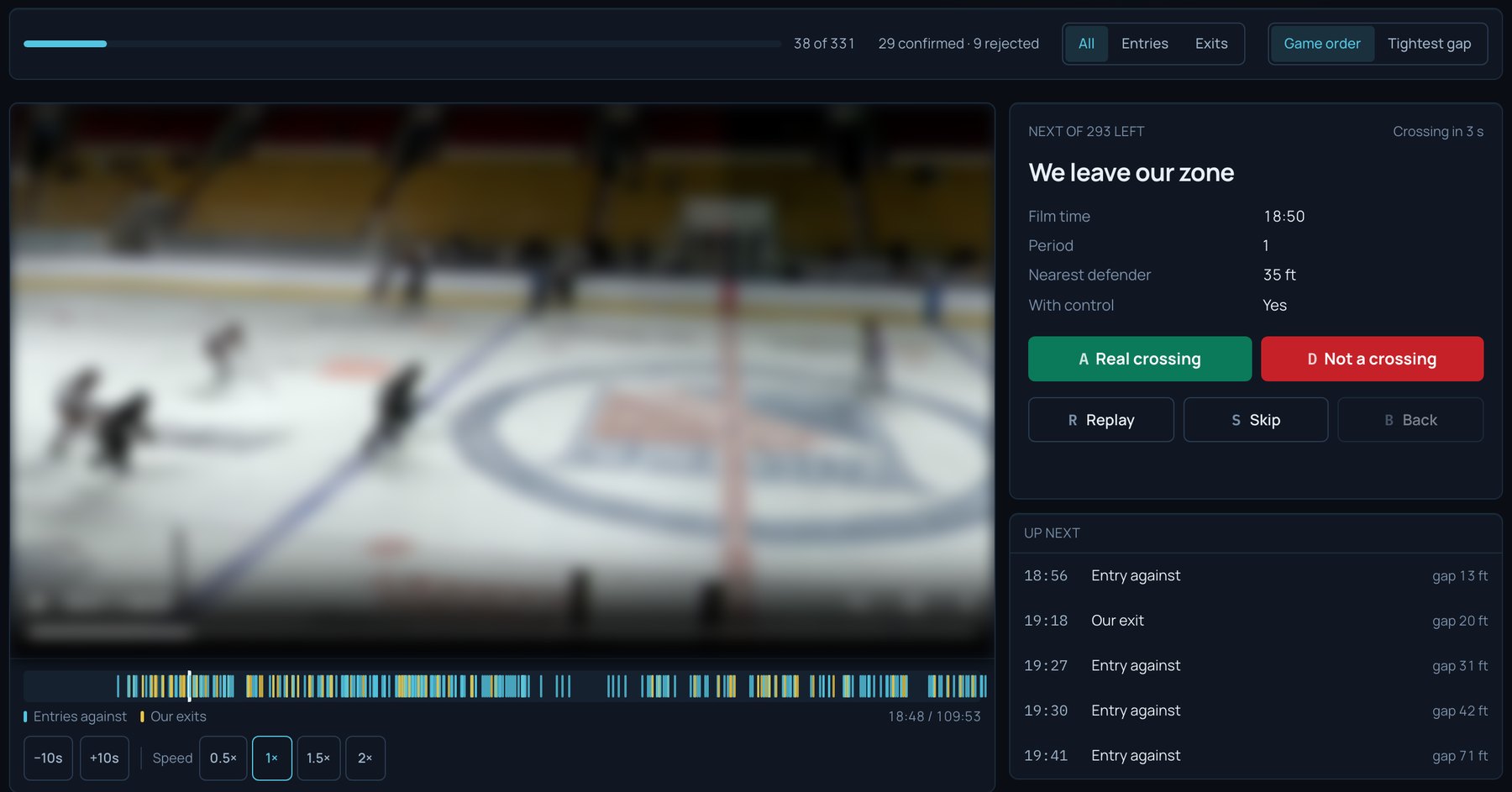
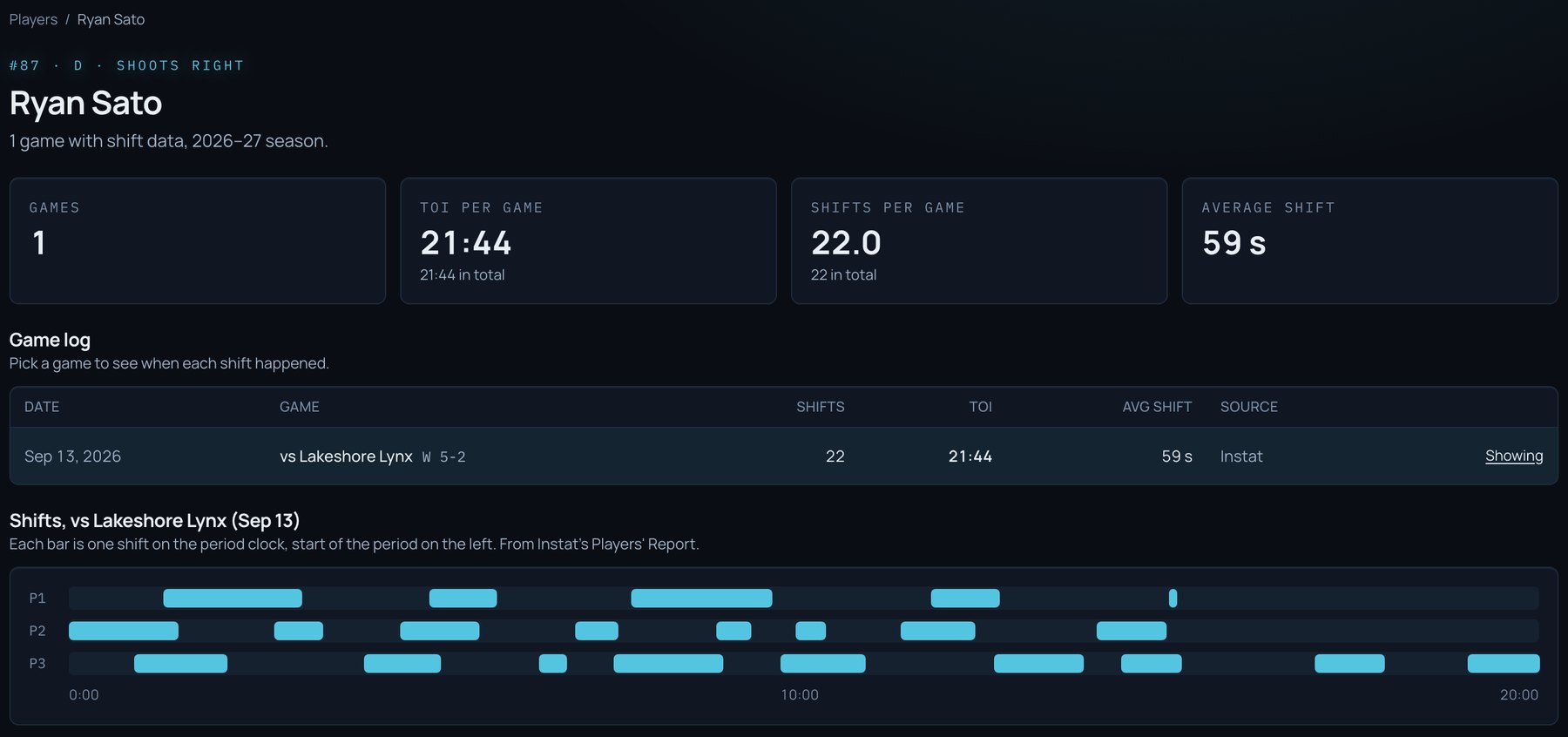
Inside the product today
What a coach opens the morning after a game. Player names are invented and the film is blurred.
03 / One connected view of the game
The film, the system, the conversation and the development plan belong together.
Space, support, pressure and positioning. Read the game beyond the event count.
Measure decisions in the context of the structure you teach.
Connect the conversation, confirmed goals and follow-through. Ask Quinn to find the source.
Turn a moment into a review, a development conversation, or a case supported by the film.
Built with the game. Still being refined. RynkIQ is in active development with early program collaboration. Film quality, identity coverage and available evidence shape what each analysis can support. See what’s ready and what’s next ↗
04 / Different perspectives. Shared ambition.
For the people helping players make the next step.
Bring your system into the film room. Make the next review more specific.
For coaches ↗Agents & advisors02Build the player’s story around defensible evidence, beyond production numbers.
For agents ↗Players & families03Understand the moments that matter. Turn feedback into a development conversation.
For players ↗05 / Earned confidence
Every insight should stand up to a second look. We keep the source, the coaching context and the limits of the evidence in view.
Read our evidence standard ↗The original play remains the reference. An observation and a prediction are different things.
Your system defines the question. Human review keeps the answer grounded.
If the camera cannot support a conclusion, the report should say so.
The next shift starts here
Bring your questions. We’ll bring the film.
Explore RynkIQ with the people building it.